


Finding God’s Authentic Flame in a World of Imitations
The mountain air carried a chill that evening in Cumberland, Kentucky. My brother and I—city boys transplanted to our grandmother’s home at the foot of Black Mountain—huddled close as she knelt before the fireplace, arranging kindling with hands that had built a thousand fires before this one.
“Watch closely,” she said, though we needed no invitation. Our eyes were already wide with wonder.
We didn’t have a fireplace at home. This was magic to us—the scrape of the match, the gentle wooing of flame, the way Grandma whispered to the fire as if it were a timid creature needing coaxing into the room.
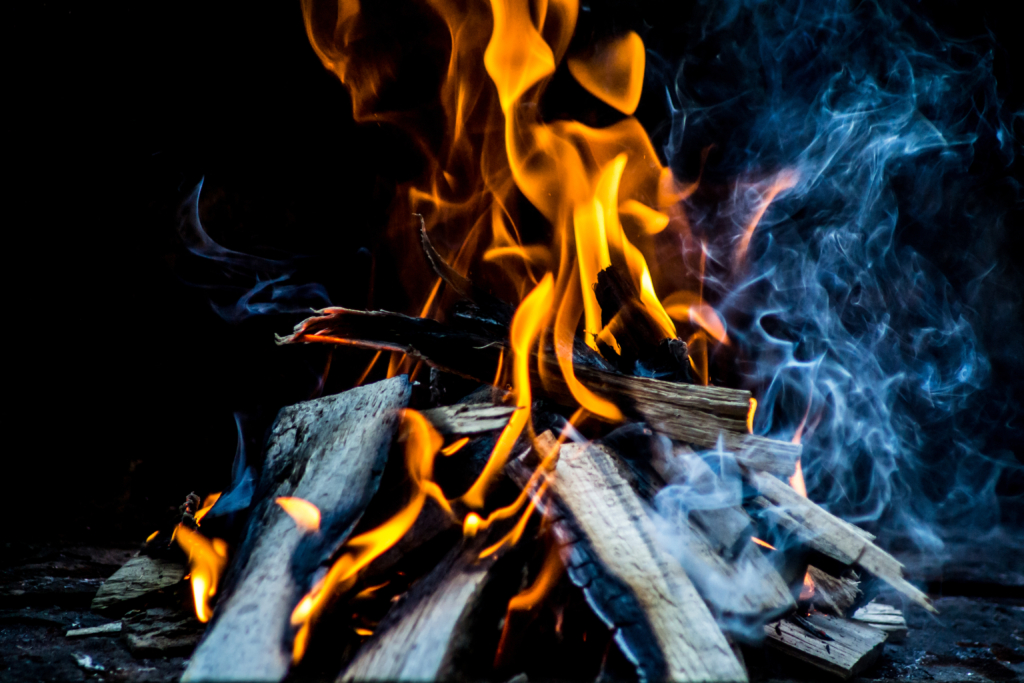
And then it bloomed—orange and gold dancers stretching toward the chimney, crackling a rhythm as ancient as time itself. We sat mesmerized on the worn carpet, faces flushed with heat and happiness, while Grandma settled into her chair.
“Let me tell you about Jesus,” she began.
And there, with shadows playing across the walls of that little mountain home, heaven seemed to bend low to listen in. Stories of fishermen leaving nets, of water becoming wine, of a Savior whose love was wilder and warmer than any fire we’d ever know. We barely moved. Barely breathed. The hours slipped by unnoticed.
When it was time for bed, we begged to sleep right there on the floor, as if afraid to leave the circle of that moment. When morning came, our first words weren’t about breakfast or adventures on the mountain waiting outside.
“Grandma, can we have another fire tonight?”
She smiled knowingly. “It’s too warm now. But tonight—yes, tonight we’ll build another one.”
We pestered her all day. Checked the sky for sunset a hundred times. Gathered extra kindling even though the woodbox was already full. Finally, as darkness began to creep over the mountain, Grandma built the second fire.
It looked the same. Crackled the same. Warmed our skin just the same.
But something was missing.
We fidgeted. Yawned. Soon abandoned our places by the hearth to find toys and distractions. The magic had somehow vanished.
Strange Fire
Years passed. The memory of those fires faded beneath the busy layers of growing up. Until I stood, nineteen and trembling, behind my first pulpit. After preaching my first sermon—waxing what I thought was eloquent wisdom for fifteen nervous minutes—I sat down, relieved and emptied.
Afterward, a familiar figure made her way toward me. Grandma, smaller now but eyes still bright as ever.
“Ron,” she said, taking my hands in hers, “do you remember staying at my house that summer in Cumberland?”
“Oh yeah, Grandma. I remember it well.”
“Do you remember the fire we built and how much you and Jack loved sitting around that fireplace?”
“I remember it like yesterday,” I said, smiling at the memory. “It was a special night, but I also recall that the second night didn’t seem as special.”
Her eyes crinkled with that wisdom that comes from decades of watching human hearts. “That’s right, and I’m gonna tell you why,” she said. “You see, the first night that we sat around the fireplace, I talked to you boys about Jesus, and the second night we just talked about… stuff.”
She squeezed my hands then, making sure I caught what was coming next.
“It wasn’t the fire that moved you to emotion, Ron. It was the topic of conversation. It was the presence of Jesus!”
When the Sacred Fire Goes Out
In Leviticus 6:13, God commands, “The fire shall ever be burning upon the altar; it shall never go out.” This wasn’t mere instruction for temple maintenance. This was a divine invitation—a reminder that God’s presence among His people was to be continually honored, continuously tended.
But sometimes, the fire goes out. Not the physical flames perhaps, but the sacred intention behind them.
Nadab and Abihu knew this too well. The sons of Aaron, they had a heritage of holy fire-tending. They’d witnessed the genuine article—fire falling from heaven to consume the sacrifice when the tabernacle was first consecrated. They knew what real divine fire looked like.
But somewhere along the way, complacency crept in. The original fire—God’s fire—was allowed to fade. And rather than humbly rekindling what heaven had started, they decided to improvise.
“Nadab and Abihu… offered strange fire before the Lord, which he commanded them not” (Leviticus 10:1).
Strange fire. Unauthorized fire. Their own fire.
It looked the same, perhaps. Heated the coals the same, maybe. But it wasn’t the same—not in origin, not in essence, not in the eyes of God.
And the consequences were swift and severe.
The Imitation Game
We’re good at imitations, aren’t we? We’ve mastered the art of making things look right while being subtly, dangerously wrong.
In our churches, we’ve learned the formulas. Three points and a poem. The right key change in the worship set. The perfect storytelling cadence. The precise moment to soften our voice for emotional effect. We know exactly which theological buttons to push for an “Amen” and which heartstrings to tug for misty eyes.
We’ve become experts at building fires that look exactly like the real thing.
After all, any old fire will do… won’t it?
But here’s the uncomfortable truth that Nadab and Abihu learned too late: strange fire may burn bright, but it burns hollow. It may look the same, it may heat the same, but it definitely does not feel the same. There is no substitute for the authentic fire of God.
The congregation might not immediately notice the difference. They might even respond with the same enthusiasm they’ve always shown. But over time, something inexplicable begins to happen. People fidget more. Yawn more. Find reasons to leave early. The magic—no, not magic, the presence—fades.
And one day, they get up from their places by our ministerial fireside and go looking for something else to fill the emptiness.
Because human hearts, like those two little boys in Kentucky, can tell the difference between a fire that merely warms the skin and one that somehow warms the soul.
Tending the True Flame
I’ve been both those sons of Aaron in my ministry journey. I’ve let the sacred fire die down while no one was watching. I’ve panicked at the cold ashes in the morning and scrambled to build something that might pass for divine. I’ve offered God’s people strange fire and called it holy.
Maybe you have too.
The painful part of this story isn’t that we sometimes let the fire go out. That’s human. The painful part is that we so often choose to fake the rekindling rather than do the vulnerable work of seeking fresh fire from heaven.
We’d rather offer strange fire than admit the true fire has gone out.
But what if we stopped pretending? What if when we noticed the embers growing cold in our ministry, our teaching, our worship leading, our small group facilitating—we simply acknowledged it?
“The fire has gone out, Lord. And I cannot light it again myself. Only You can send flame from heaven. I’ll wait here, tending what remains, until You do.”
This is the difference between strange fire and sacred waiting.
Coming Fresh from the Altar
When Moses blessed the people after the tabernacle was built, “fire came out from before the Lord and consumed the burnt offering and the fat on the altar. When all the people saw it, they shouted and fell on their faces” (Leviticus 9:24).
They didn’t fall on their faces because Moses had excellent presentation skills. They didn’t shout because the tabernacle team had nailed the ambiance. They were overcome because they recognized something otherworldly—something that could only be explained by the presence of God Himself.
This is what our congregations hunger for, though they may not have words to express it. This is what your Sunday School class is hoping for as they file in with their coffee cups and tired eyes. This is what the youth in your midweek service can sense even if they can’t articulate it.
They’re not looking for a well-produced imitation of what used to be. They’re looking for evidence that someone has been with Jesus—recently, intimately, transformatively.
They want what comes fresh off the altar of God, where the real fire burns.
A Grandmother’s Wisdom
My grandmother never went to seminary. Never read theological treatises on authentic ministry. But sitting in that small-town church service watching her grandson’s first sermon, she recognized something I was still too inexperienced to see:
What ministers isn’t the fire itself. What ministers is Who the fire reveals.
The first night by her fireplace wasn’t special because the flames were particularly impressive. It was special because the flames illuminated Jesus. The stories. The presence. The conversation that pointed beyond ourselves to Something—Someone—greater.
The second night, we “just talked about stuff.” And stuff, no matter how interesting, cannot sustain wonder. Cannot fill the God-shaped hollow inside us. Cannot compete with even the faintest glimpse of glory.
I wonder sometimes what might change if we approached each sermon, each lesson, each counseling session, each worship set with my grandmother’s wisdom ringing in our ears: “It wasn’t the fire that moved you to emotion; it was the topic of conversation. It was the presence of Jesus!”
The Fire That Never Dies
There’s a beautiful irony in the story of strange fire. The very next chapter after Nadab and Abihu’s tragic error, God gives detailed instructions for the Day of Atonement—the annual ceremony that would open the way for reconciliation between God and people.
Even after strange fire, God makes a way back.
Even after our worst ministerial failures, our most embarrassing attempts at manufacturing what only heaven can ignite, God invites us to return to authentic fire-tending.
Today, wherever you are in your ministry journey—whether you’re preaching to thousands or teaching a handful of children, whether you’re leading worship for a congregation or simply trying to keep faith alive in your own heart—the invitation stands:
Stop building strange fire.
Stop trying to manufacture what only God can give.
Instead, pull up a chair beside the true altar. Sit in the presence of Jesus until His warmth becomes yours to share. Make Him the topic of conversation—not just with those you serve, but first and most authentically with yourself.
Because when you minister from that place—when what you say or sing or teach or preach comes fresh off the altar of God where the real fire burns—you won’t have to work so hard to keep people engaged.
They’ll lean in of their own accord, just like two little boys on a cool Kentucky evening, mesmerized not by your skill but by the unmistakable presence your life reveals.
And the fire? It will never go out.